Looking for a self-threading serger that makes sewing quicker and cleaner? This guide highlights five top options that simplify threading, improve stitch quality, and handle fabrics from knits to denim. The best picks suit makers who want fast setup, reliable performance, and clear threading guides. Each product is evaluated for who it’s best for, plus practical cautions to consider before you buy.
| Product | Best For | Why It Stands Out |
|---|---|---|
| Brother AIR1800 | Colorful thread changes | Jet air threading, bright LED workspace, easy 2/3/4-thread options |
| Brother 1034D | Heavy fabrics | Metal frame, high speed, reliable for multiple layers |
| Janome AirThread 2000D | One-push threading | One-push air threading, 8-piece feed dog system |
| Brother Innov-ís Airflow 3000 | Versatile finishing | Air threading with multiple feet for finishing seams and gathering |
| SewLaVie 360 Upgraded | Beginner to intermediate | Open threading, 12 stitches, fast 1,300 SPM |
Brother AIR1800 Air Serger with Jet Air Threading

Features include Jet Air Threading that uses compressed air to thread the looper, simplifying color changes for projects with multiple threads. It supports 2/3/4 threads and offers flatlock, overlock, and rolled hem stitches, ideal for specialty fabrics and stretchy materials. Color-coded thread guides help you stay organized when juggling two to four threads with one or two needles.
Who it’s for: Best for sewists who frequently switch thread colors and work with knits or stretchy fabrics. The air-threading system reduces setup time, which is helpful for long projects. A potential limitation is that the jet air threading mechanism can be less intuitive if you’re new to serging and may require familiarity with the device’s threading ports.
Brother Serger, 1034D

Built with a durable metal frame and interior components, this serger is designed for robust performance. It can handle multiple fabric layers and offers 1,300 stitches per minute with a standard 3- or 4-thread setup. An underlooper threader is included to aid faster threading, and the machine ships with several accessory feet for versatility.
Who it’s for: Best for crafters and home sewists who routinely work with heavier fabrics like denim. The metal frame contributes to stability during long, demanding projects. Caution: as a basic entry-level model, it may lack some modern conveniences found on newer machines, such as advanced automatic threading for all looper pathways.
Janome AirThread 2000D Serger

Equipped with a one-push air threading system and an 8-piece feed dog arrangement, this model emphasizes quick setup and reliable stitch formation. It supports both 3-thread and 2-thread applications and includes a built-in needle threader and lay-in tension for straightforward adjustments. The air threading reduces fiddly threading steps, especially helpful for beginners.
Who it’s for: Best for beginners to intermediate users who value easy setup and consistent tension. A potential limitation is that some users may prefer more robust features or heavier-duty options when projects involve heavy layers or complex finishes.
Brother Innov-ís Airflow 3000 Serger

Designed to cut and finish seams in one pass, this serger uses Air Threading Technology and comes with specialized feet like gathering and piping feet for decorative finishing. The Airflow 3000 emphasizes versatility with consistent stitch quality and quick transitions between fabric types.
Who it’s for: Best for creators who want a versatile machine for finishing garments with multiple foot options. Limitation: while feature-rich, it may be more complex for absolute beginners who need a simpler, more straightforward setup.
SewLaVie 360 Upgraded Serger
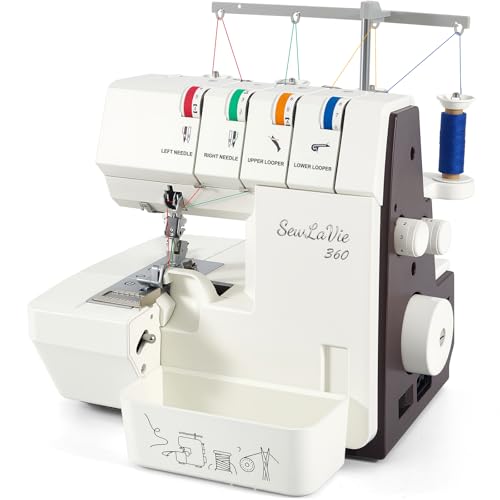
This serger focuses on accessible threading and speed, offering 2/3/4-thread capability with 12 built-in stitches. It’s engineered for quick setup with an open threading area that helps troubleshoot without dismantling parts. It runs at up to 1,300 stitches per minute and includes differential feed for knits and tricky fabrics.
Who it’s for: Best for intermediate users and pros who want faster throughput and easier troubleshooting. Caution: as with many affordable sergers, higher-end, industrial-style features may be limited compared to premium models.
Buying Guide: Key Considerations When Choosing a Self-Threading Serger
- Threading System: Do you prefer jet air threading, one-push air threading, or traditional manual threading? Air threading generally reduces setup time but may require familiarization.
- Thread Options: Is 2-, 3-, or 4-thread capability most important for your projects? Consider whether you need rolled hems, flatlock, or overlock stitches.
- Fabric Handling: Do you work with knits, wovens, denim, or delicate fabrics? Machines with differential feed help manage stretch and prevent puckering on lightweight fabrics.
- Speed and Power: Look for stitches per minute and a stable frame for heavy materials. A metal frame typically adds durability for frequent use.
- Ease of Use: Color-coded guides, visible tension settings, and intuitive threading paths reduce setup time and boost productivity.
- Foot Availability: Specialized feet (gathering, piping, blind hem) expand finishing options. Ensure compatibility with the feet you need.
Frequently Asked Questions
- What is the main advantage of self-threading sergers? It reduces manual threading steps, saving time and reducing frustration during changes in thread color or stitch types.
- Can a 2-thread serger handle heavy fabrics? A 2-thread setup is typically lighter on fabric weight; for heavy materials, a 3- or 4-thread configuration with a stronger motor or metal frame is preferable.
- Are air threading sergers easier for beginners? Yes, air threading typically simplifies threading paths, though initial setup may require learning the device’s threading ports.
- Is a differential feed necessary for knits? Differential feed helps manage stretch and avoid puckering, especially on sheer or delicate knits.
- Do all these models support rolled hems? Most 3- and 4-thread sergers include rolled hem options, but verify rollover capabilities in product specifications.
- What should I consider about maintenance? Regular cleaning, oiling per manufacturer directions, and replacing needles and blades when needed maintain performance.