Whether you’re finishing garments, hemming activewear, or adding decorative edges to DIY crafts, a compact serger can dramatically speed up edge finishing without taking up heavy studio space. This guide highlights five small-to-midsized serger machines that suit light-to-moderate sewing work, especially for beginners and hobbyists who need reliable performance in a compact footprint. Each option is evaluated for ease of use, thread options, speed, and suitability for specific fabrics. The buyer tips below help you choose the best fit for your projects.
Summary at a glance: the following table lists five compact sergers with their key strengths. Use it to compare thread options, speed, and ideal project types at a glance.
| Product | Best For | Threading / Operation |
|---|---|---|
| FN2-4D 4-Thread Serger | Everyday garments; durable metal build | 4-thread; adjustable stitch length |
| VEVOR 1250 SPM 2/3/4 Thread | Home tailoring; fast finishing | 2/3/4-thread; differential feed |
| VEVOR 1250 SPM 3/4 Thread with LED | Versatile fabric range; strong construction | 3/4-thread; high speed; LED light |
| SewLaVie 12-Stitch 2/3/4 Thread | DIY crafts; wide stitch options | 2/3/4-thread; open threading |
| MILLEPUNTI MLD42 2/3/4 Thread | Decorative and basic seams; solid value | 2/3/4-thread; detachable trim trap |
FN2-4D 4-Thread Serger — Steel-Driven Edge Finishing

This compact, cast-iron serger delivers robust build quality and steady performance for everyday garment finishing. The dually adjustable stitch length (0.1″ to 0.13″) allows precise edge finishes on T-shirts, cotton blends, and lightweight knits. Ideal for hobbyists who value durability and consistent results in a small workspace.
- Best for: Home sewists who need a sturdy metal machine for frequent edge finishing
- Why chosen: Cast-iron construction enhances longevity and reduces vibration for smooth seams
- Caution: Heavier than plastic-bodied machines; ensure stable table support
VEVOR 1250 SPM 2/3/4 Thread Overlock
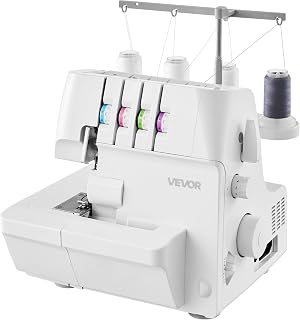
This serger offers 2/3/4-thread versatility with a 0.7–2.0 differential feed to accommodate stretch fabrics and lightweight knits. Aimed at home tailors and small businesses, it supports quick edge finishing and includes built-in organization features like a trim trap and tool storage. Speed is strong, with up to 1,250 stitches per minute.
- Best for: Small studios and home tailors needing flexible thread options
- Why chosen: Differential feed minimizes fabric distortion on knits; fast operation
- Caution: The setup may require careful threading to switch between thread configurations
VEVOR 1250 SPM 3/4 Thread With LED
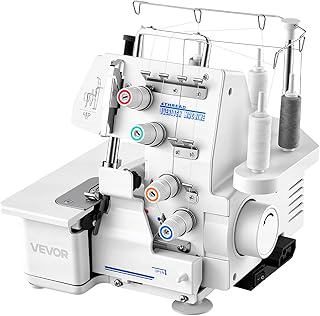
This model emphasizes 3/4-thread work with a bright LED to illuminate the seam area, reinforcing accuracy on darker fabrics or detailed edges. The iron frame promises steady operation and reduced vibration, making it suitable for longer sessions in home studios. It’s a strong pick for versatile fabric handling and clean finishes.
- Best for: Crafters who work in varied lighting conditions or on darker fabrics
- Why chosen: LED lighting improves visibility for precise overlock stitching
- Caution: Heavier LED-equipped units may feel bulkier on a small desk
SewLaVie 360 Upgraded Serger — 2/3/4 Thread

Promoting accessible threading with an open threading area, this model is designed for beginners and home sewists who want quick setup and fewer troubleshooting steps. It runs up to 1,300 stitches per minute and supports 12 stitch types, making it versatile for everyday garments and decorative edges. A built-in differential feed manages knits without excessive ripple.
- Best for: Beginners and hobbyists seeking simple threading and fast results
- Why chosen: Open threading area reduces setup time and mistakes
- Caution: Open threading may still feel unfamiliar to absolute first-time users
MILLEPUNTI MLD42 Serger — 2/3/4 Thread

The MLD42 model brings a full 12-stitch range with 2/3/4-thread versatility and a detachable trim trap. The metal frame provides robust stability, and a complete accessory kit supports a smooth start for new users. This option is well-suited for decorative stitching, denim reinforcement, and basic overlock finishes.
- Best for: Value-focused buyers needing a complete starter kit
- Why chosen: Detachable trim trap adds convenience for trims and edge finishing
- Caution: Heavier metal frame may require a sturdier table setup
Buying Guide: What To Consider When Choosing A Tiny Serger
Threading simplicity matters. Look for open threading or clearly labeled looper paths to reduce setup time, especially for beginners. If you work with knits or stretch fabrics, prioritise a differential feed that minimizes stretching and rippling edges.
- Fabric range: For light fabrics like jersey and cotton knits, choose models with adjustable differential feed and 2/3/4-thread options.
- Speed vs. control: Higher stitches-per-minute (SPM) models finish projects faster, but ensure the machine remains easy to control for precise edges.
- Lighting and visibility: LED lights and clear thread guides help maintain accuracy in low-light spaces.
- Stability: Metal frames offer durability and smoother operation; consider the weight if you need to move the machine often.
- Maintenance: Check for available accessories, built-in storage, and simple access to bobbins and knives for routine maintenance.
Frequently Asked Questions
- What is a serger and how does it differ from a standard sewing machine?
A serger creates finished edges with overlock stitches, often using multiple threads, and trims excess fabric in one step, unlike traditional machines that primarily sew straight seams. - Do tiny sergers perform well on thick fabrics?
Many compact sergers handle light to medium-weight fabrics; for very thick materials, opt for models with robust motors and larger cutting widths. - Is open threading easier for beginners?
Yes, open threading typically reduces setup time and makes looper path access more intuitive, though it may require some practice to master. - Should I prioritize speed or stitch versatility?
Speed is beneficial for larger projects, while versatility (2/3/4-thread options and adjustable stitch lengths) offers broader finishing capabilities. - Can I use these sergers for decorative sewing?
Yes, many models include multiple stitch types and decorative options suitable for edge finishes and embellishments.